Counting (an)other estuary
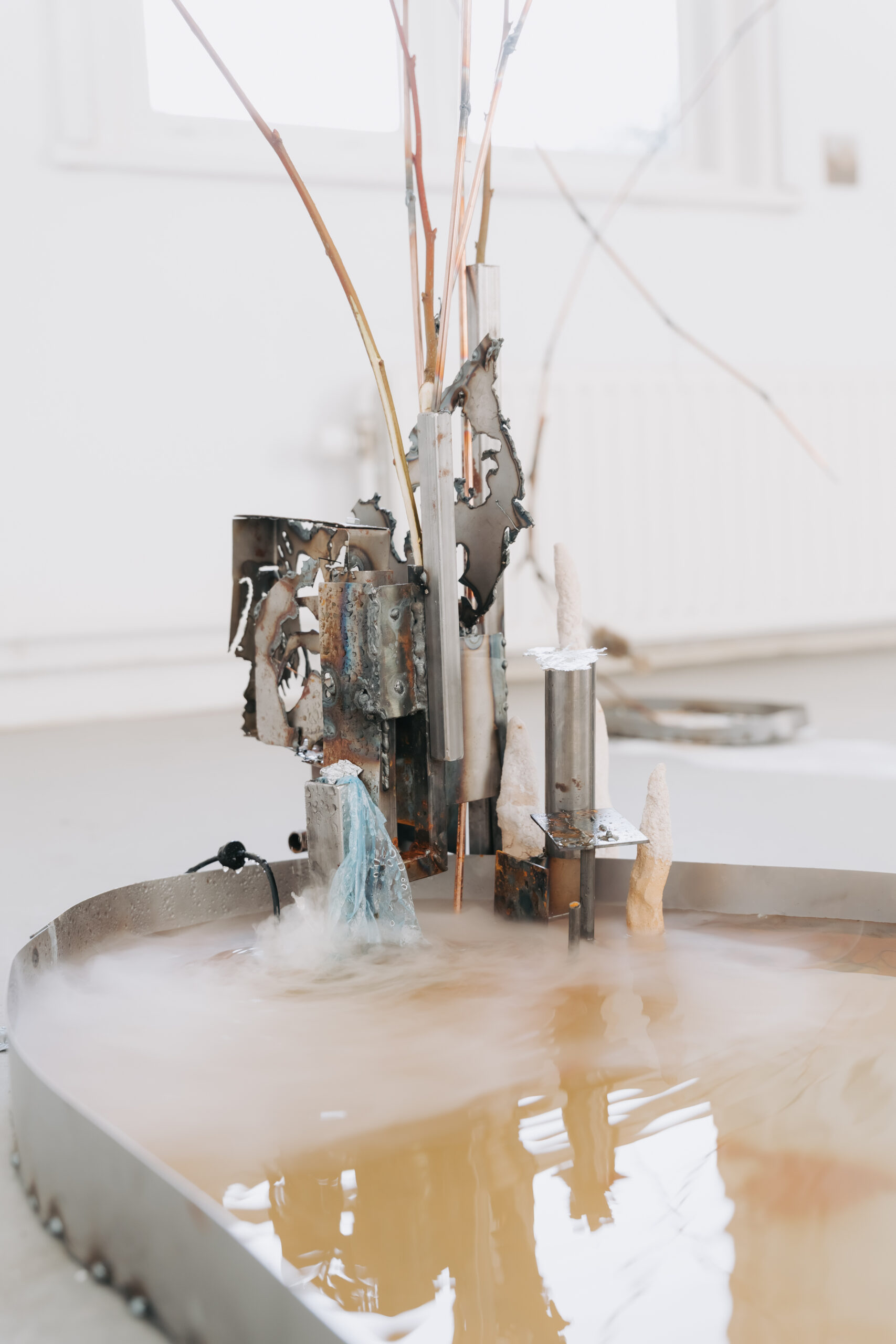
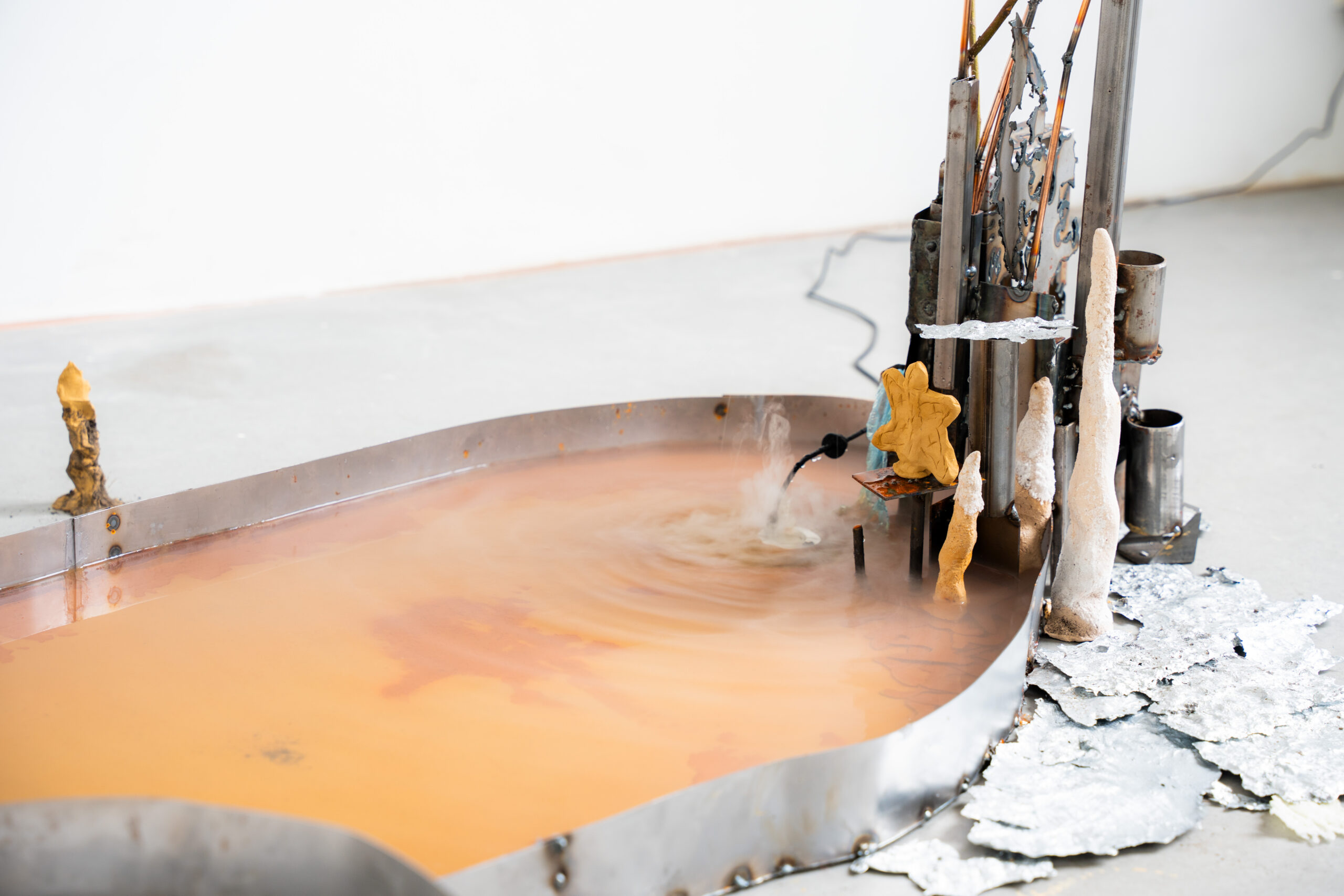
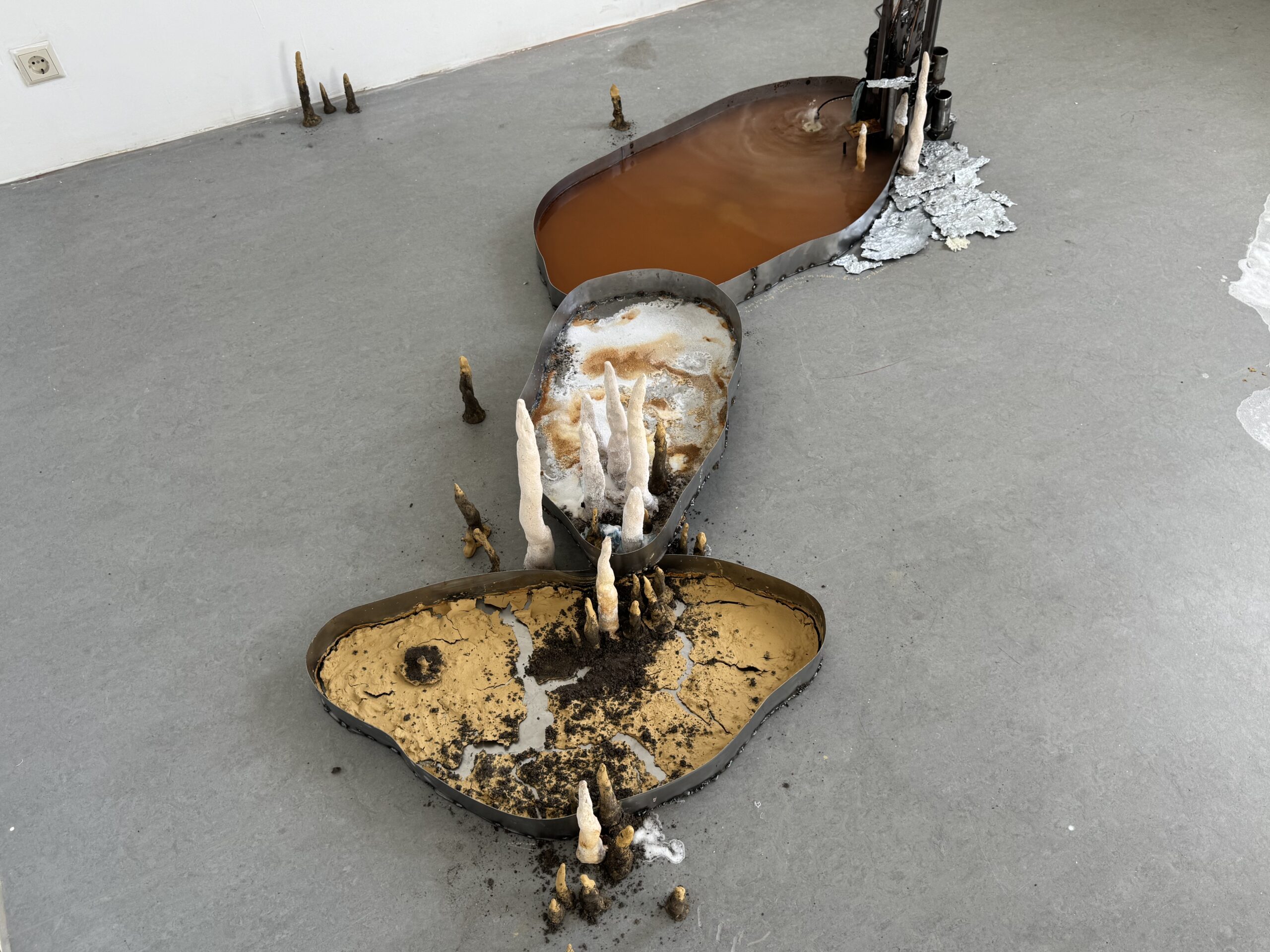
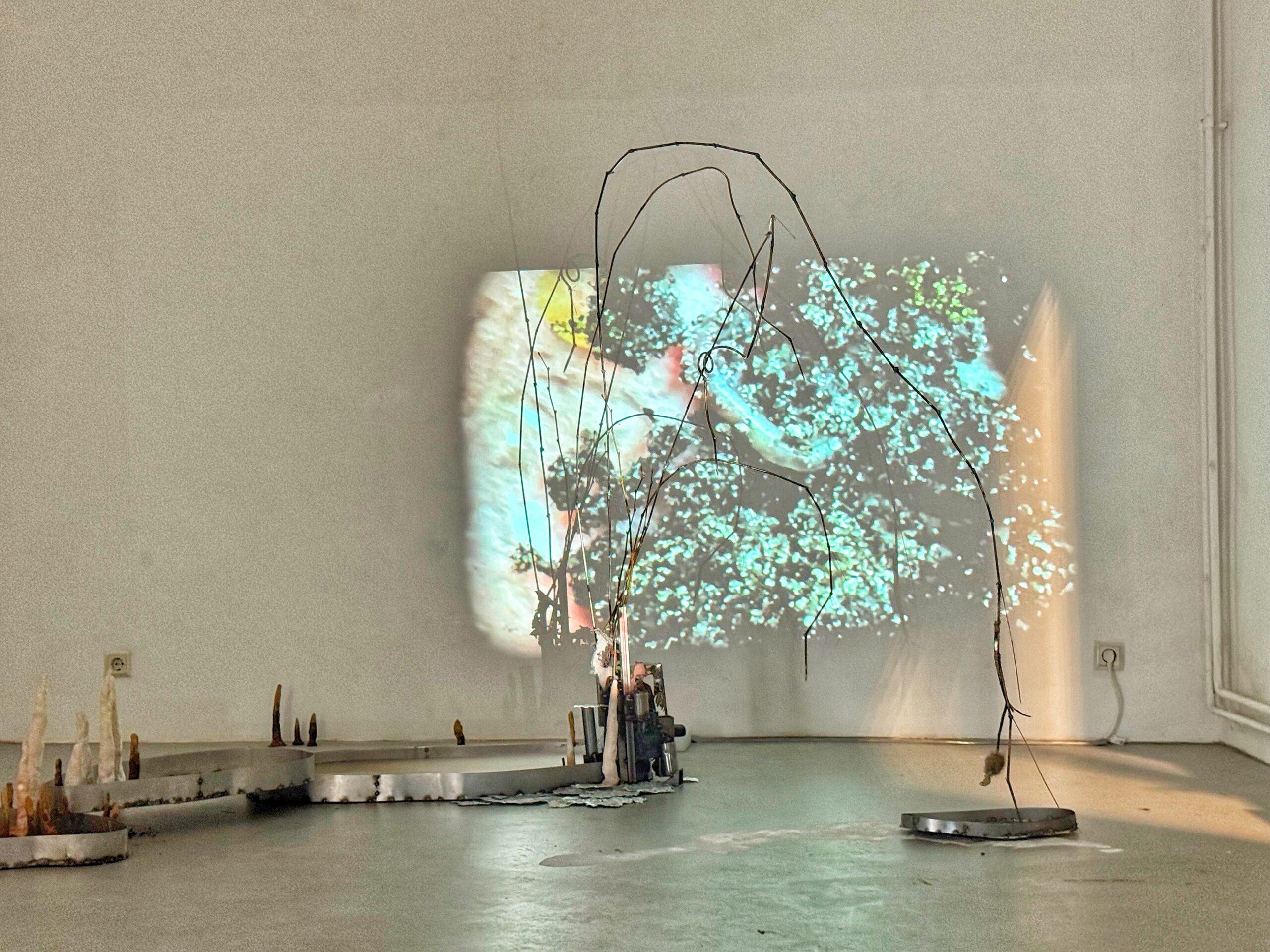
Medium: Seed, water, salt, soil, memory, humidity, body, waste metal
Sound: An ongoing sound archive composed of recordings from different substances’ transmutation.
Video: 5,30 min (edited by Pritam Mitra)
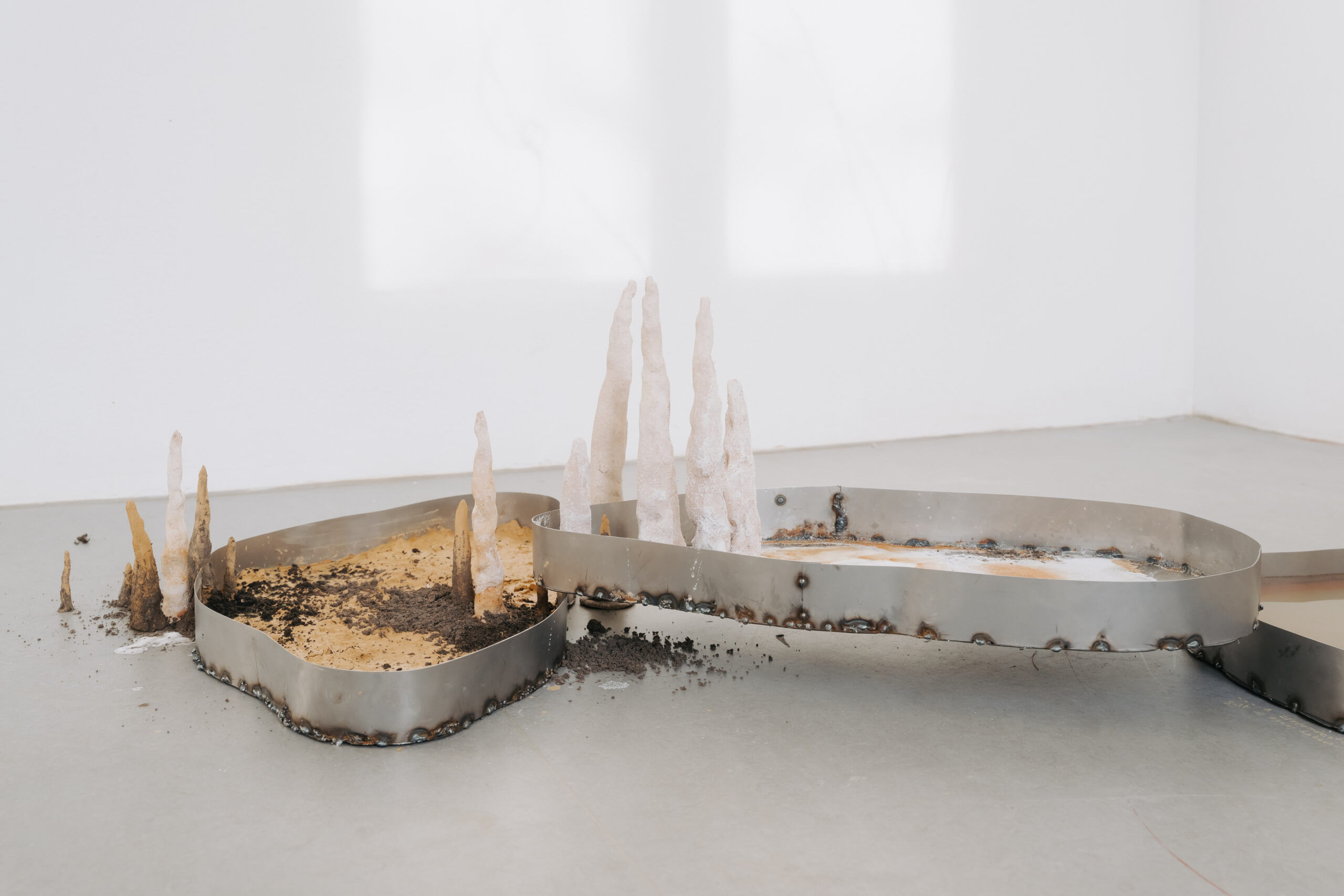
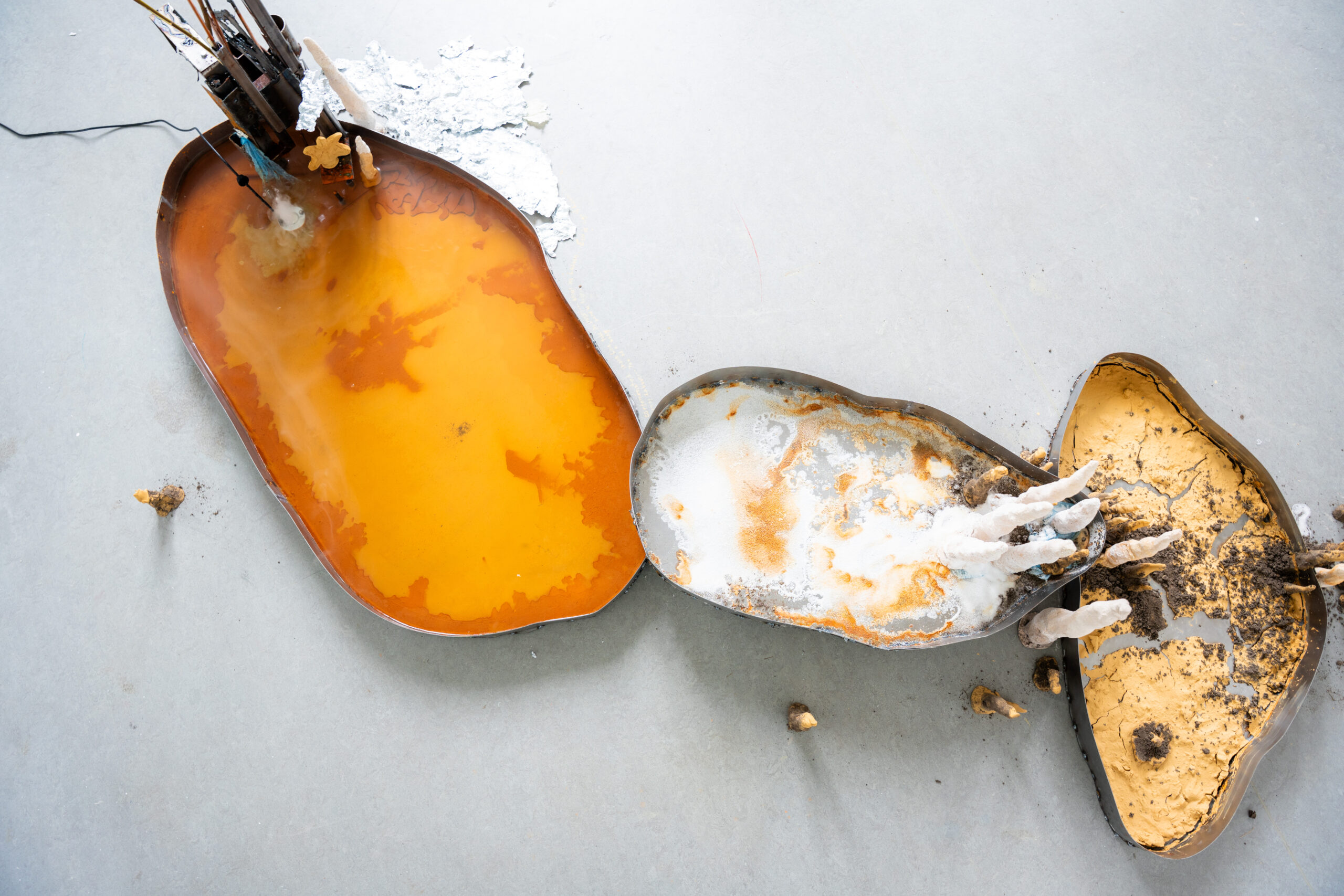
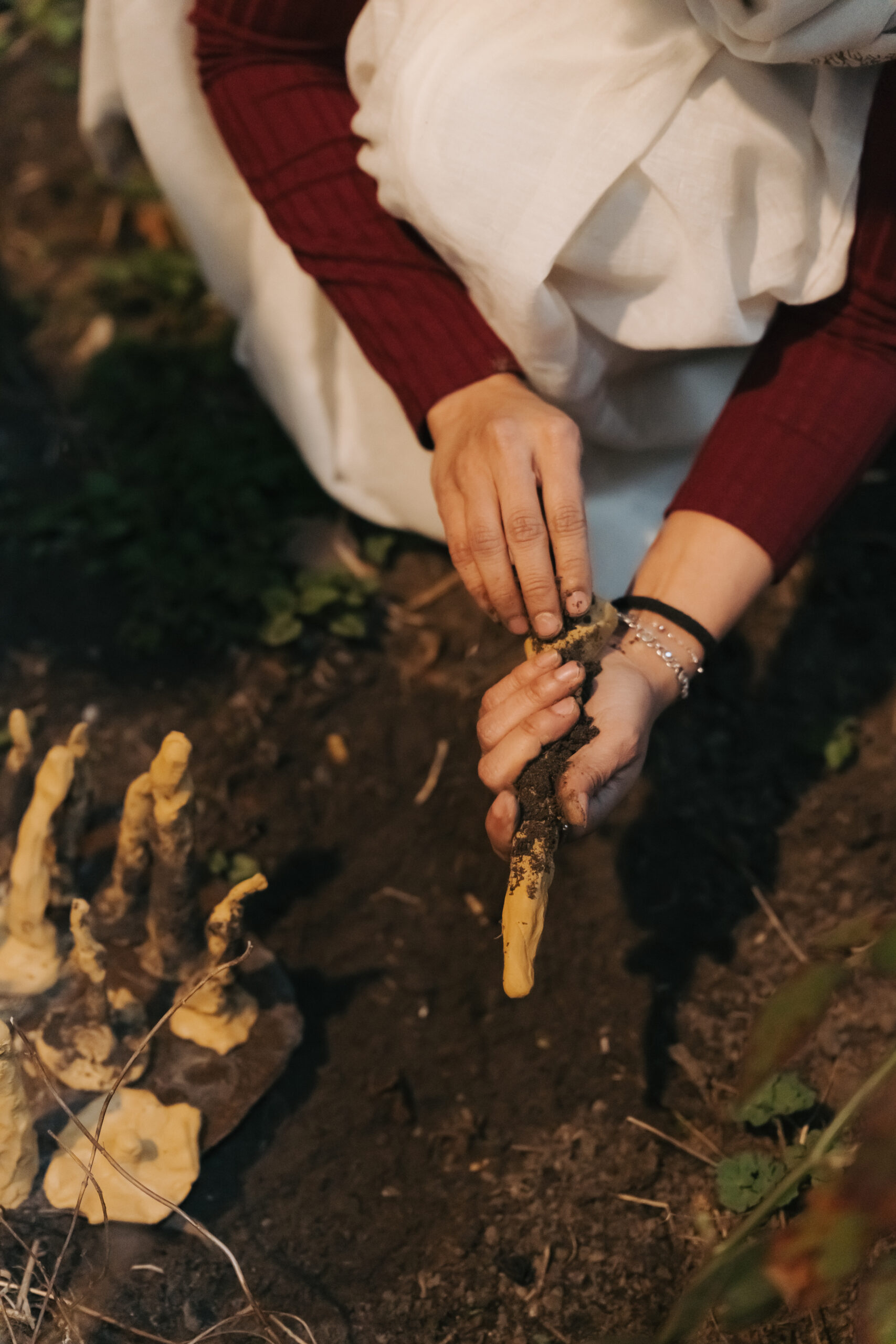
Image: After 30 days of activation
Intimacy grows
where the body leans
toward roots in silence.
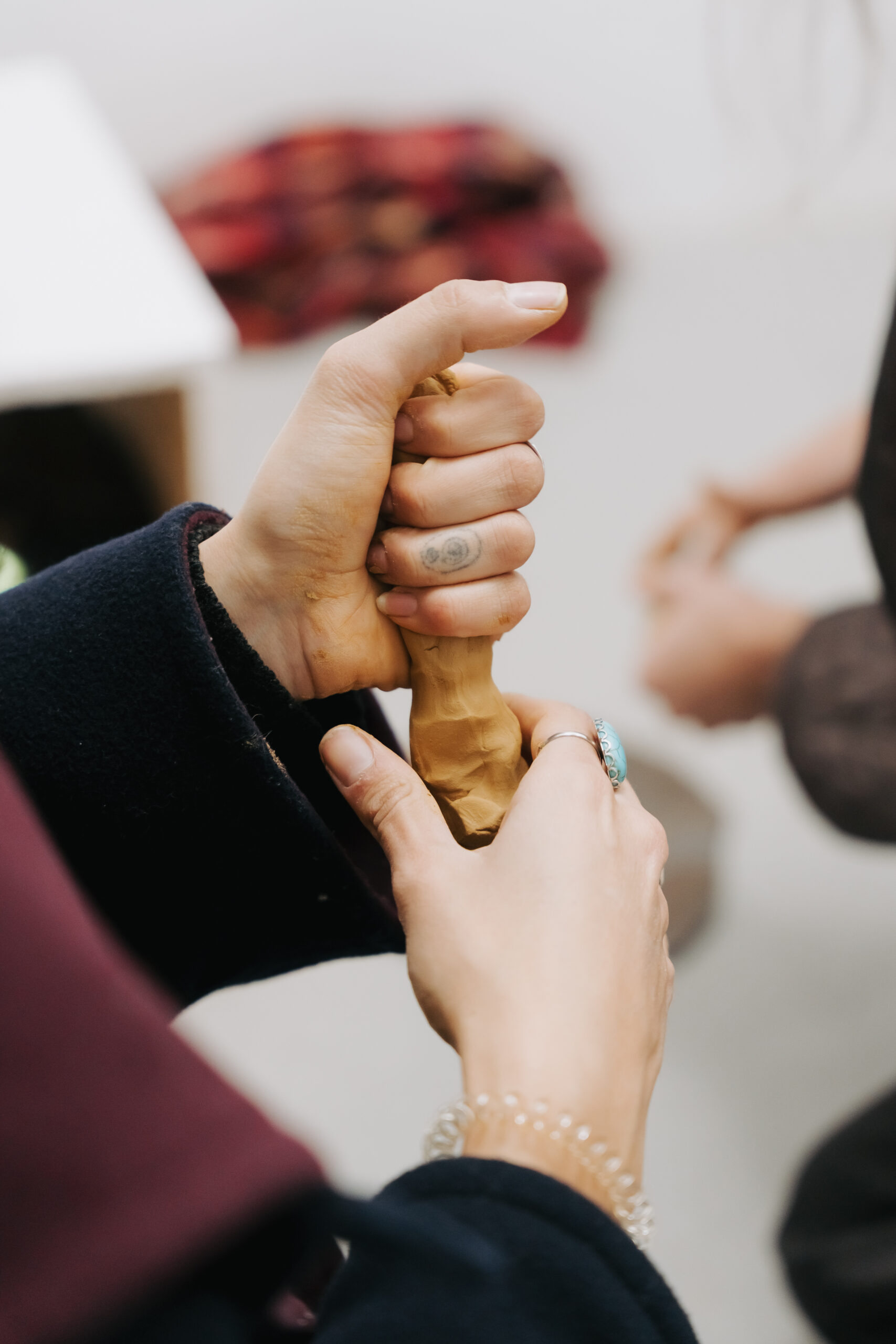
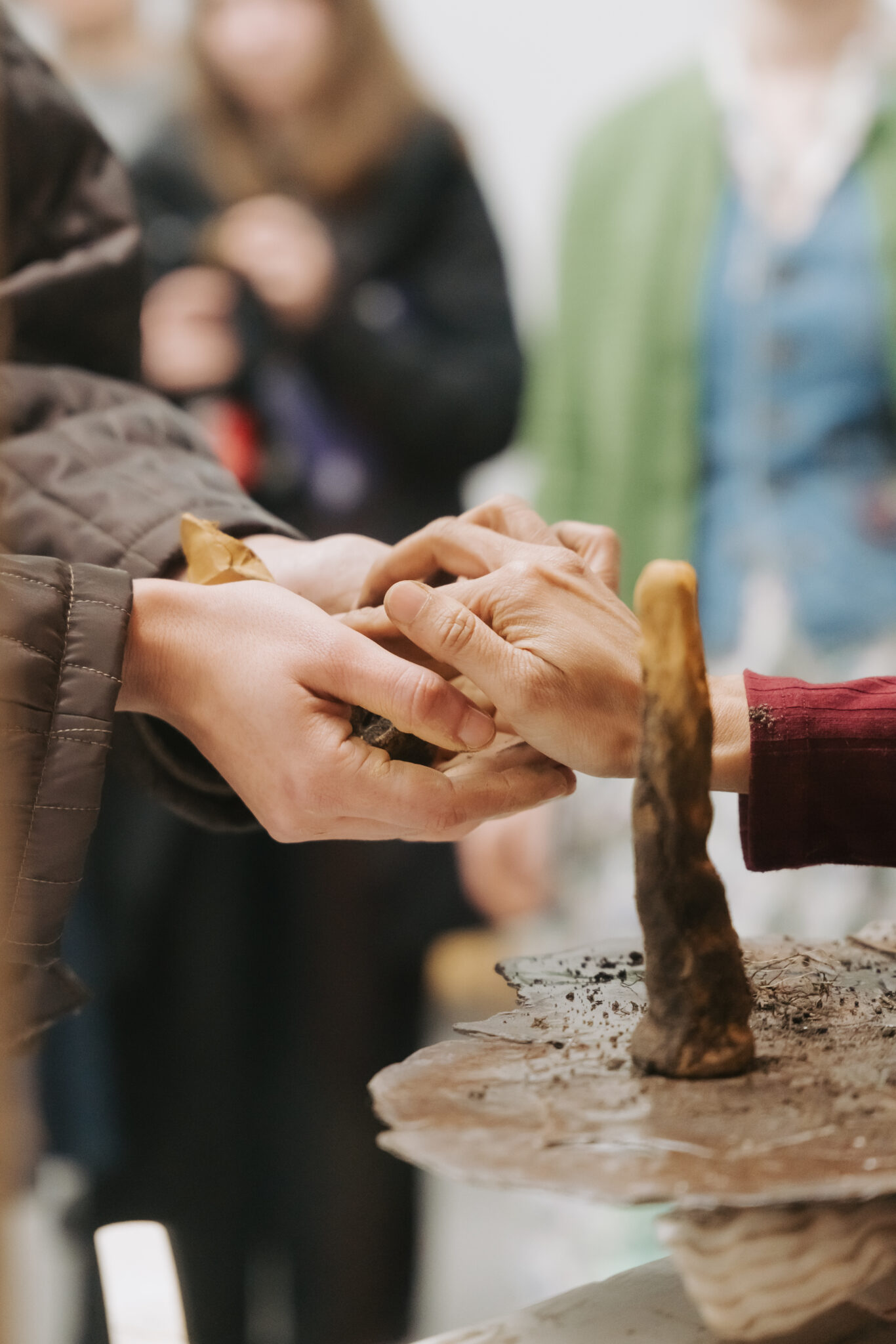
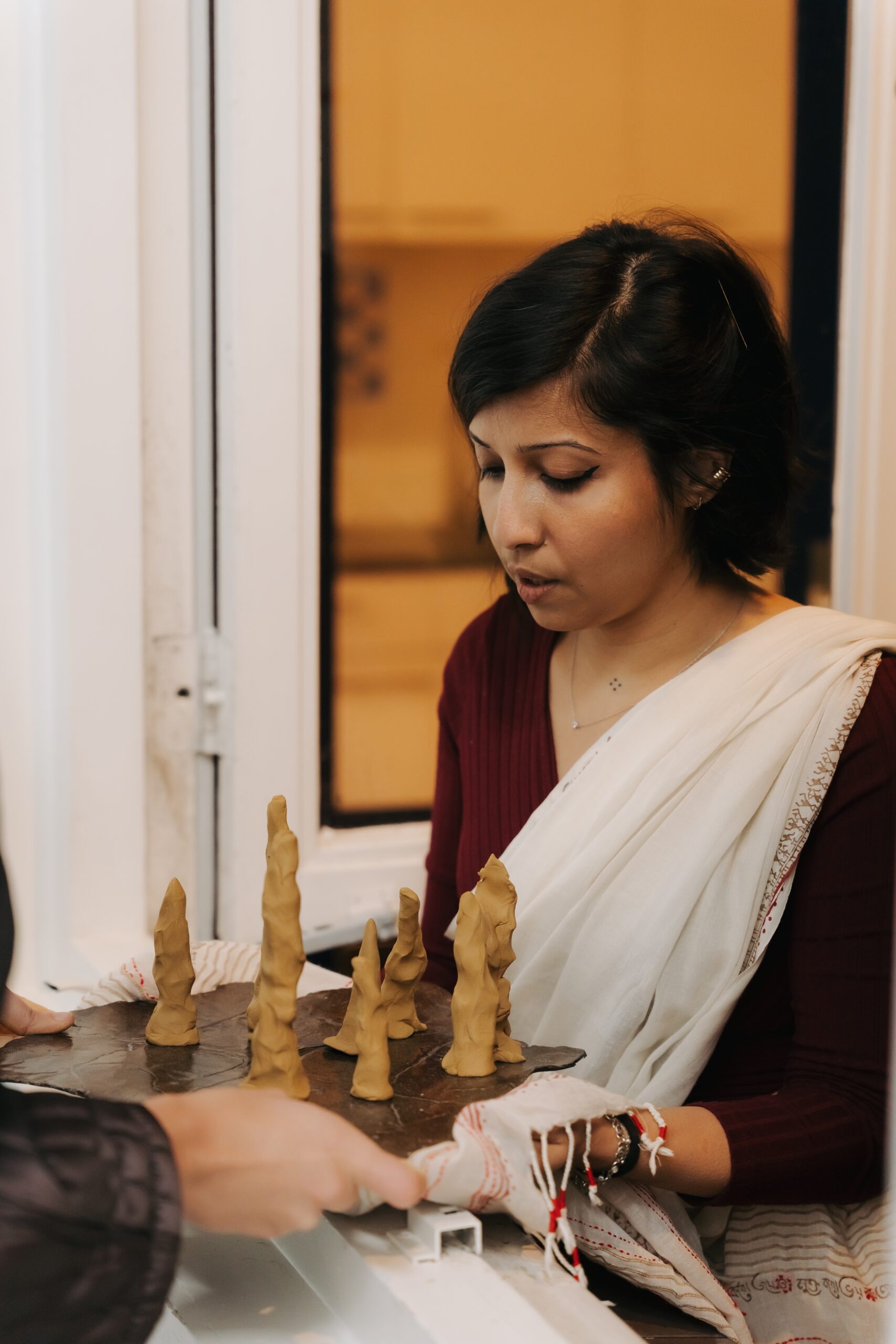
Fingers meet soil as if meeting an ancestor, with warmth, pause, breath”””””
making and taking space with each inhale and exhale. Together, we gather
to listen with our gestures.A slow offering:
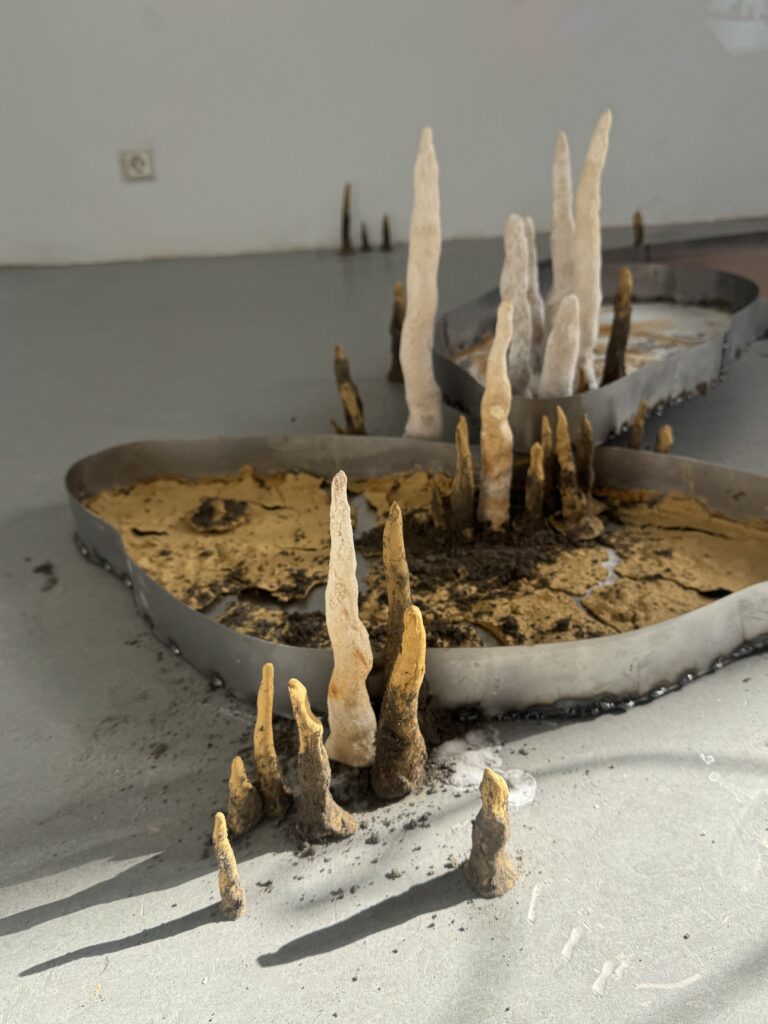
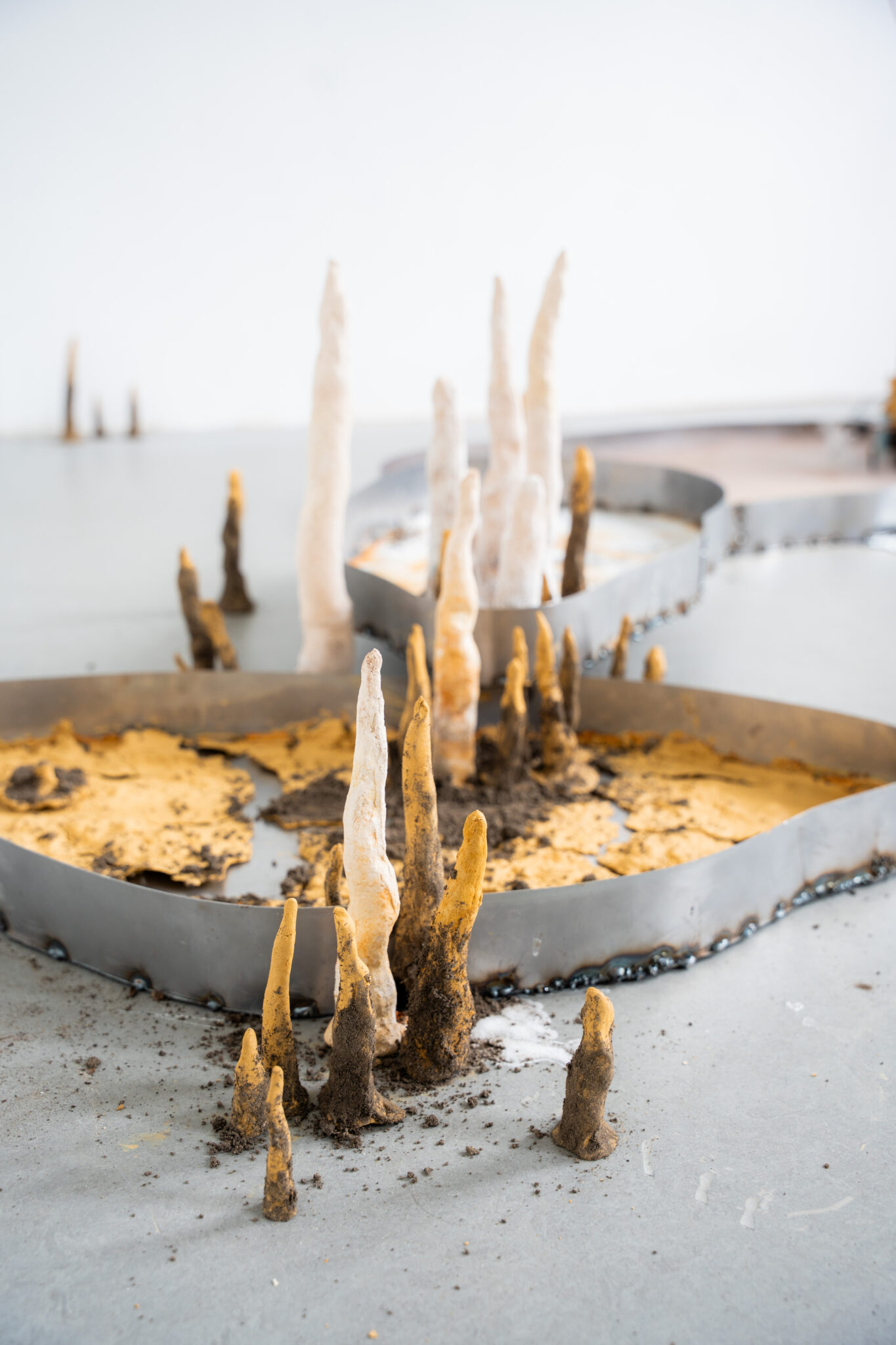
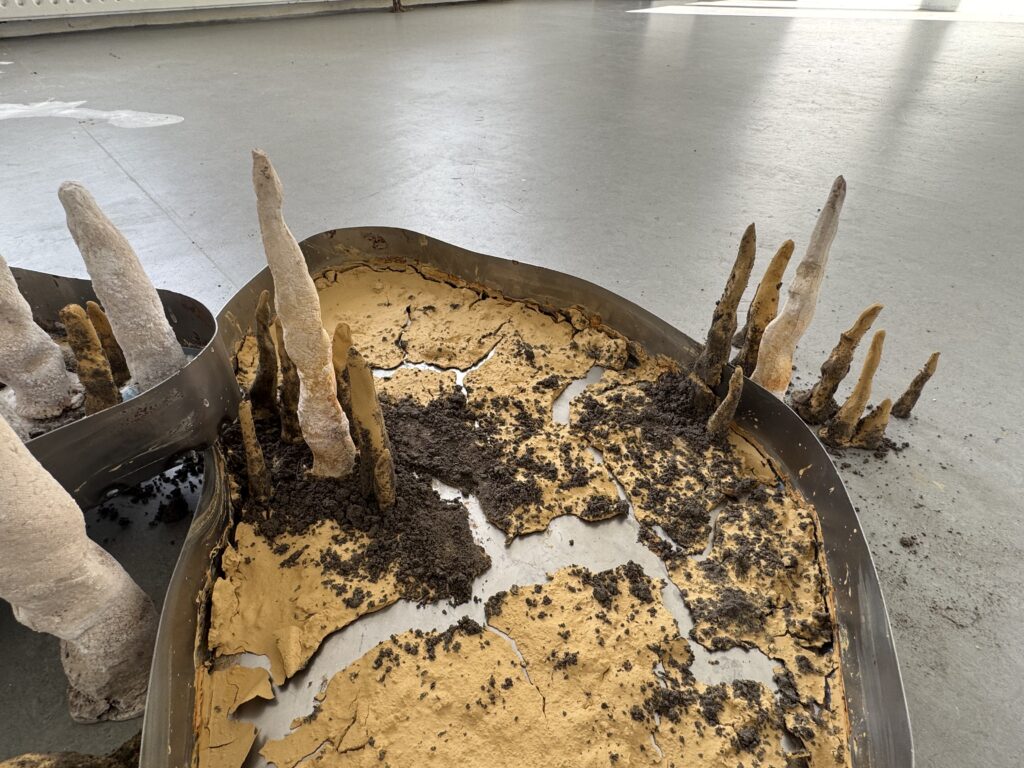
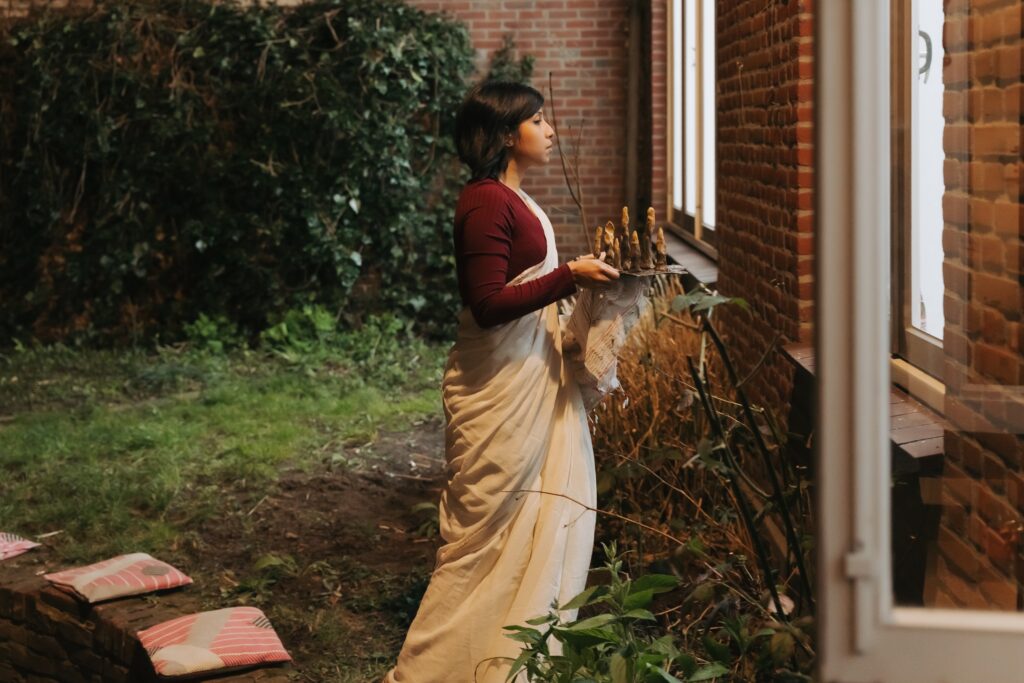
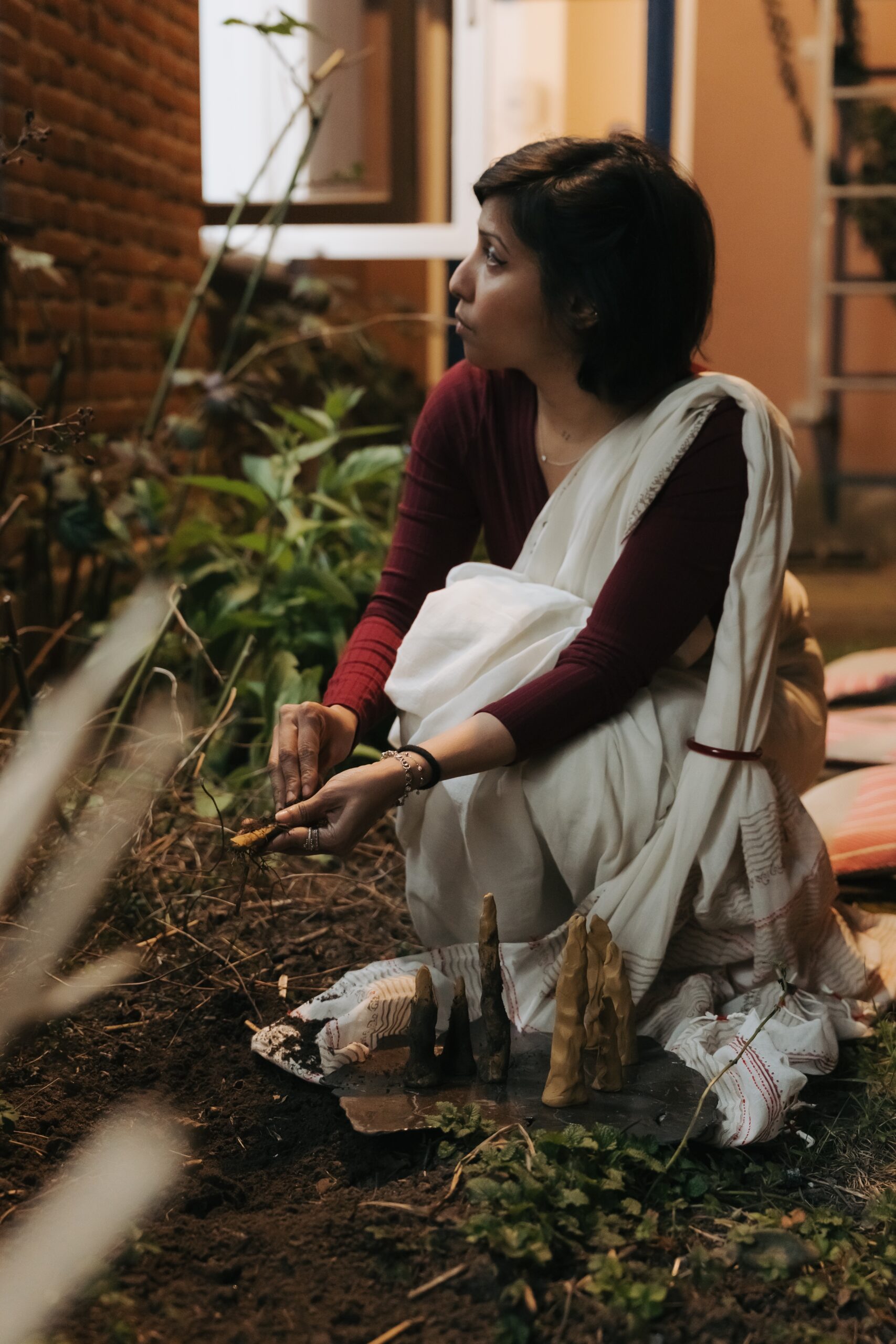
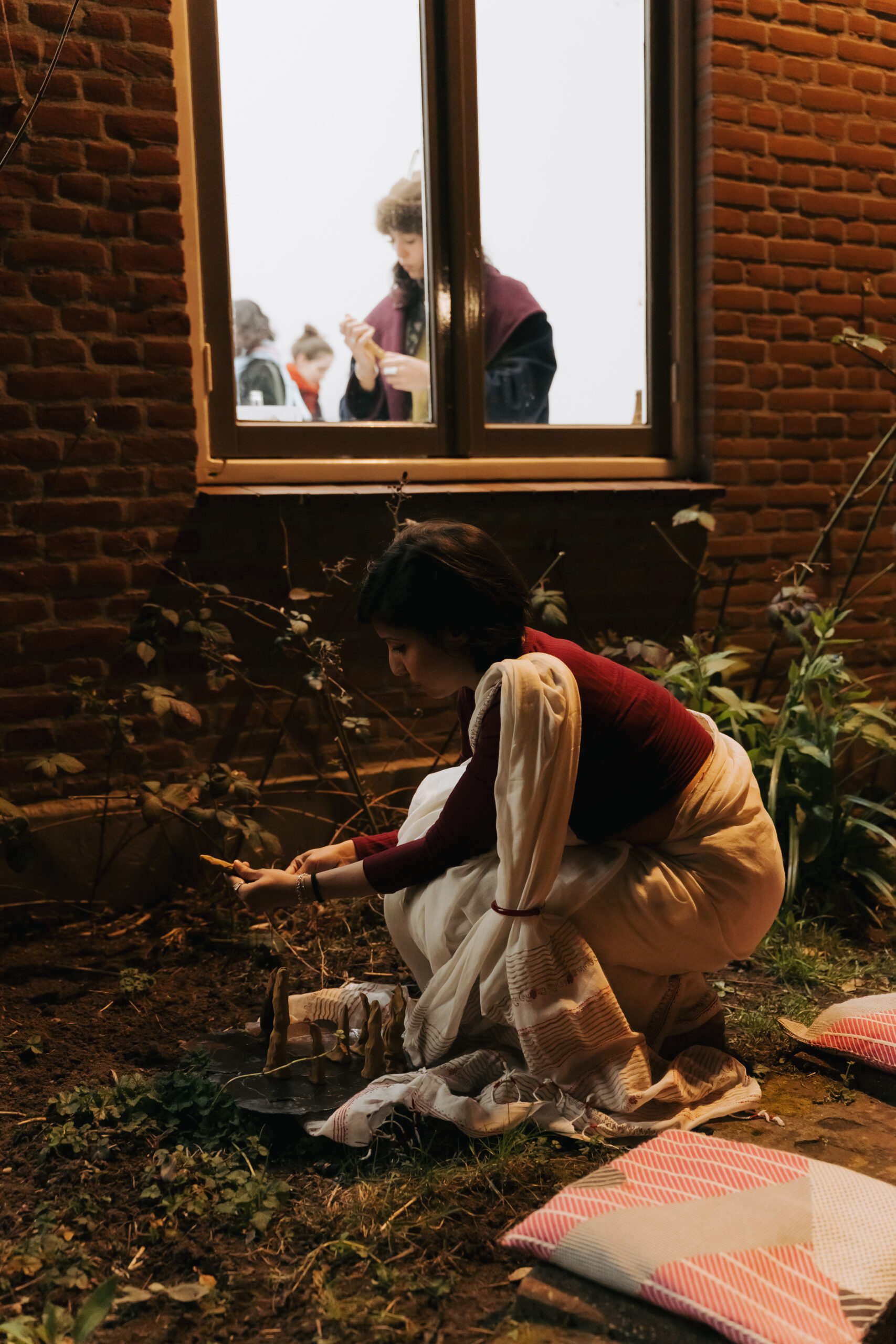
Breathing roots planted with care, around a contaminated mangrove, where salt and time are thinning its hold. Embrace the alchemy of efflorescence
inside the living body of roots;
for its own becoming. From my roots to yours to ours,,,,,
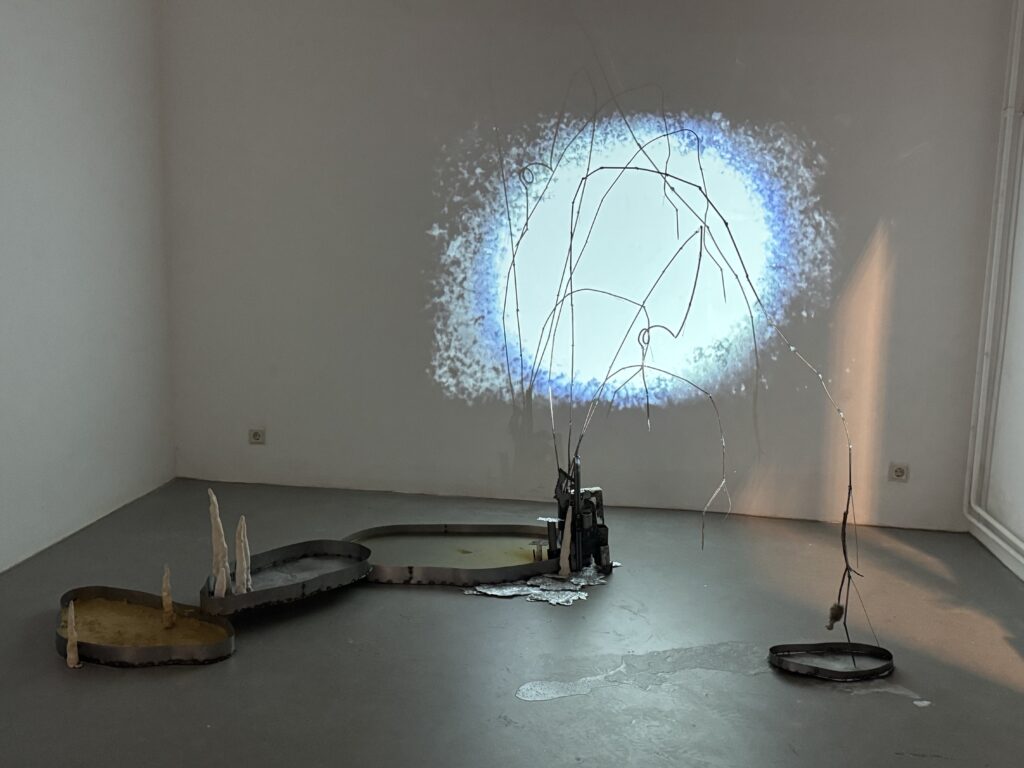
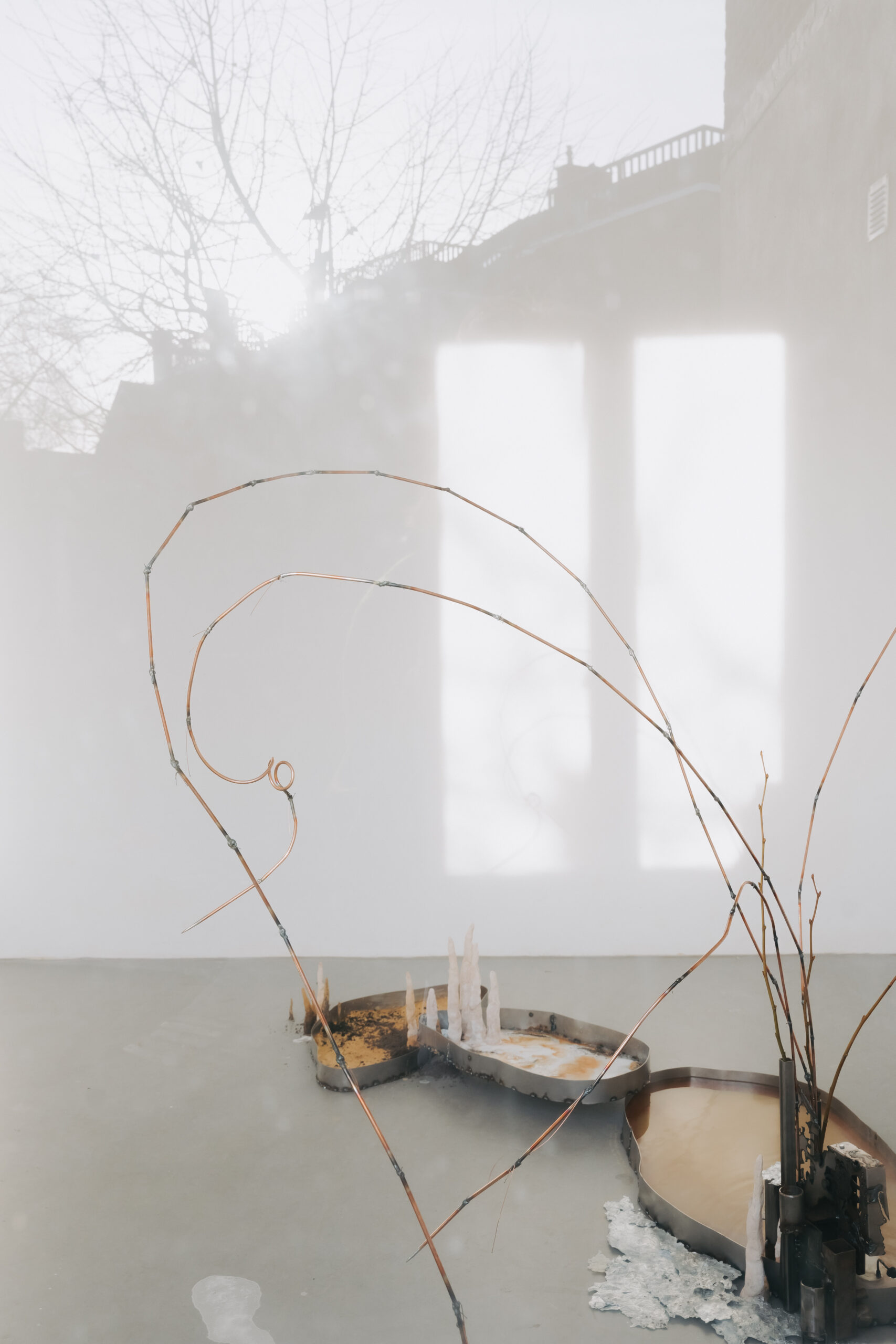
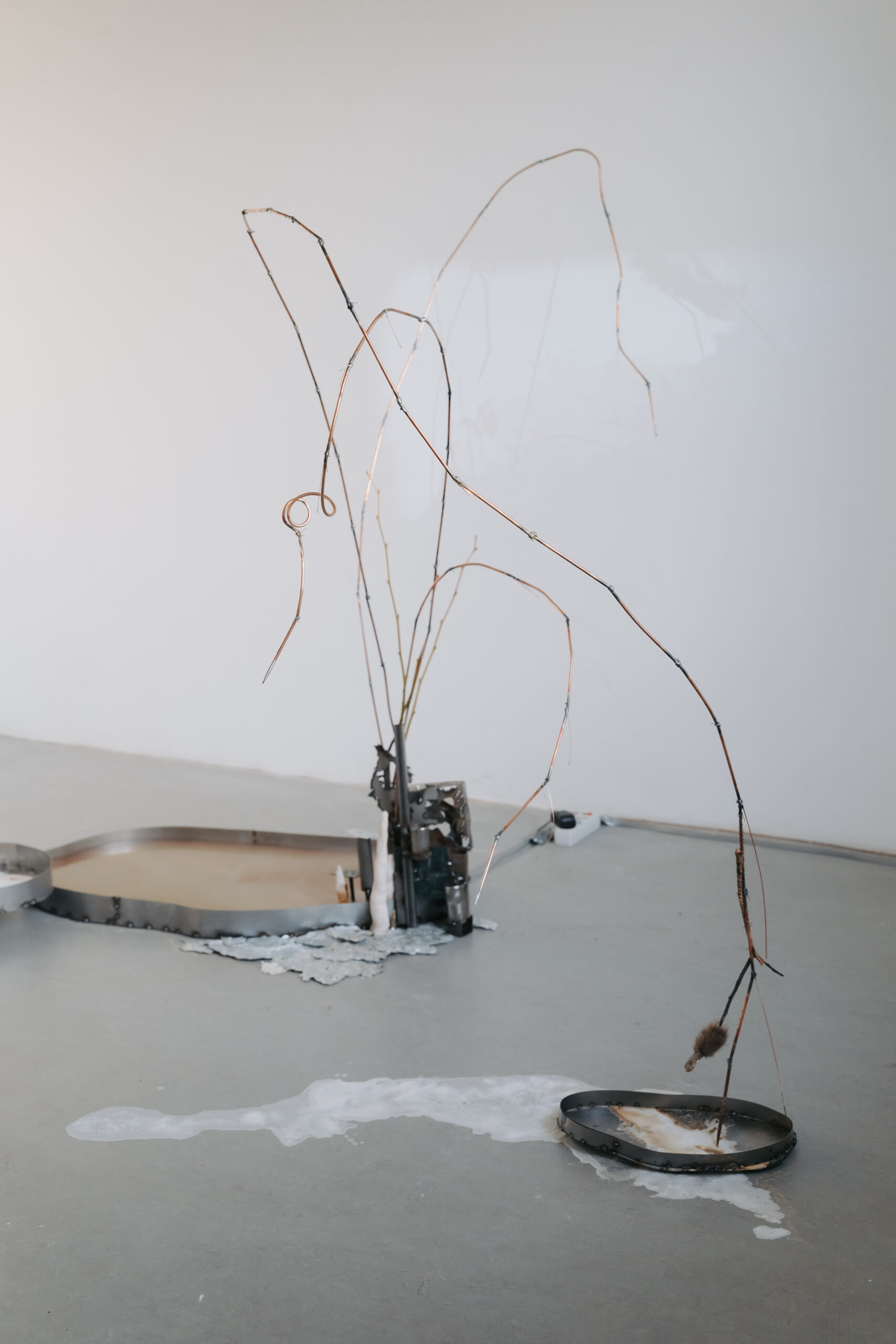
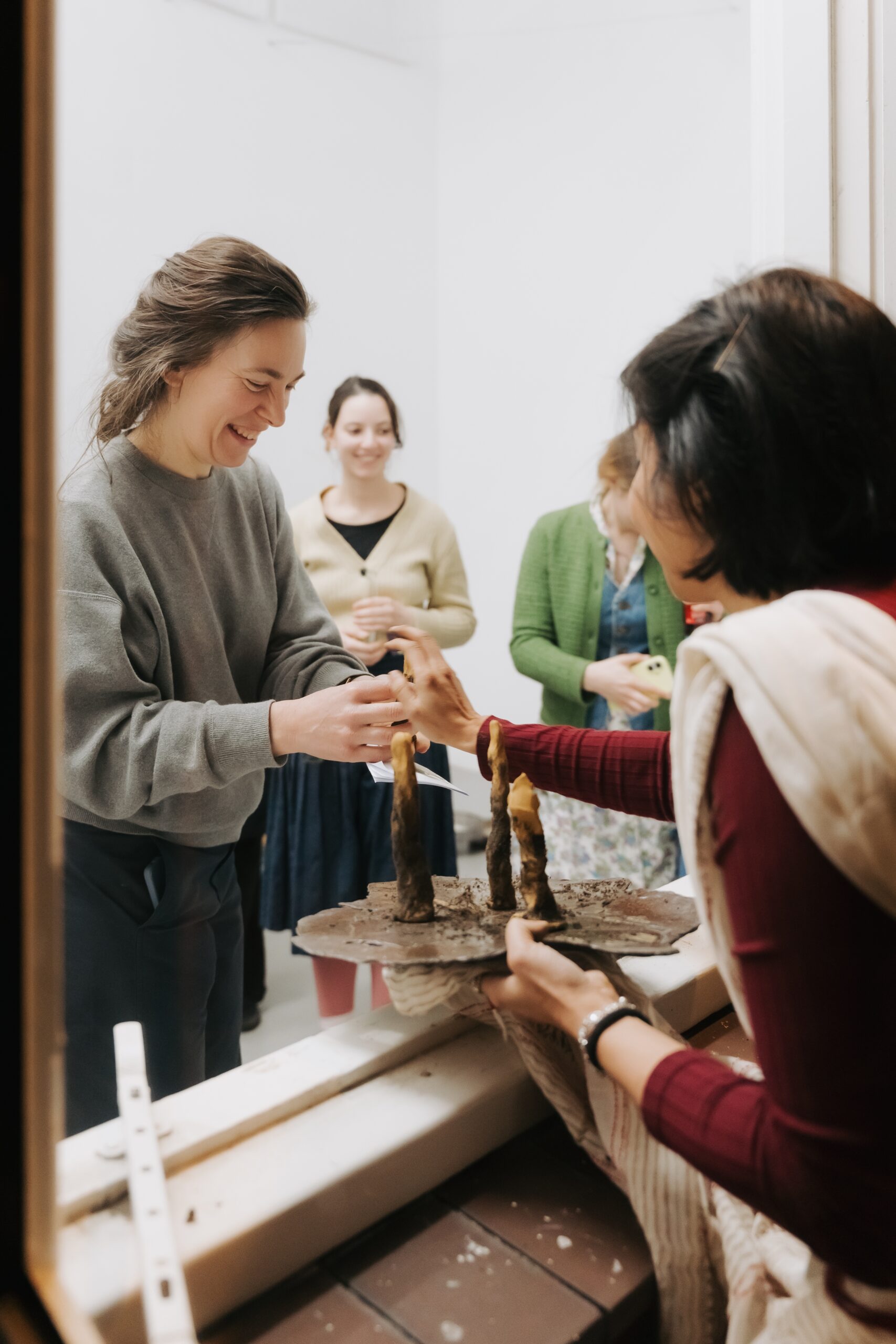
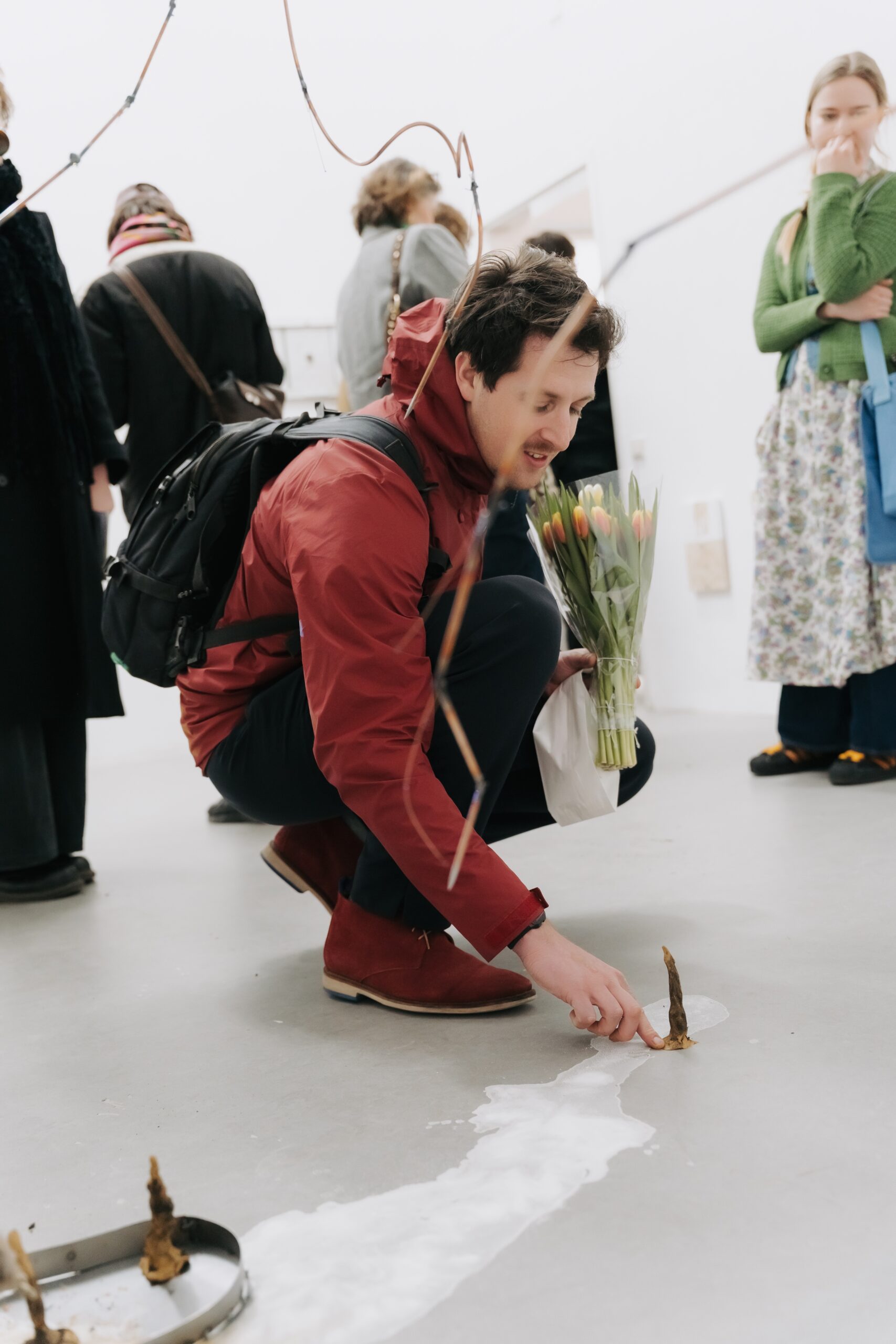
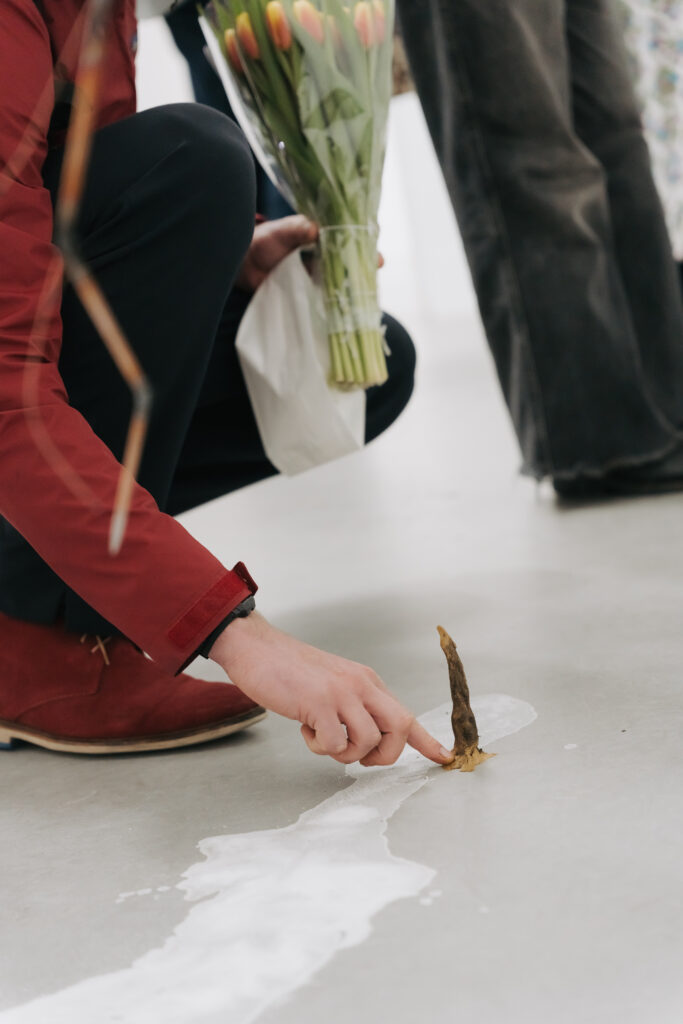
This installation presents a portrait of a contaminated water body. Here, substances activated and performed in the space by drying, rusting, growing, contaminating, and leaving permanent traces on the exhibition space that echoed the mangrove as an archive of sediment, salinity, and human extraction.
This work mimic the invisible alchemic shifts of substances within the mangrove, bringing them poetically into the gallery space while questioning how “Nurture” could become a political practice (hoping–failing–staying–becoming). My research positioned Nurture as a verb- an active continuation of care. By thinking with Maria Puig de la Bellacasa’s idea that care involves “labor/work, affect/affections, ethics/politics”, and contentious negotiation.
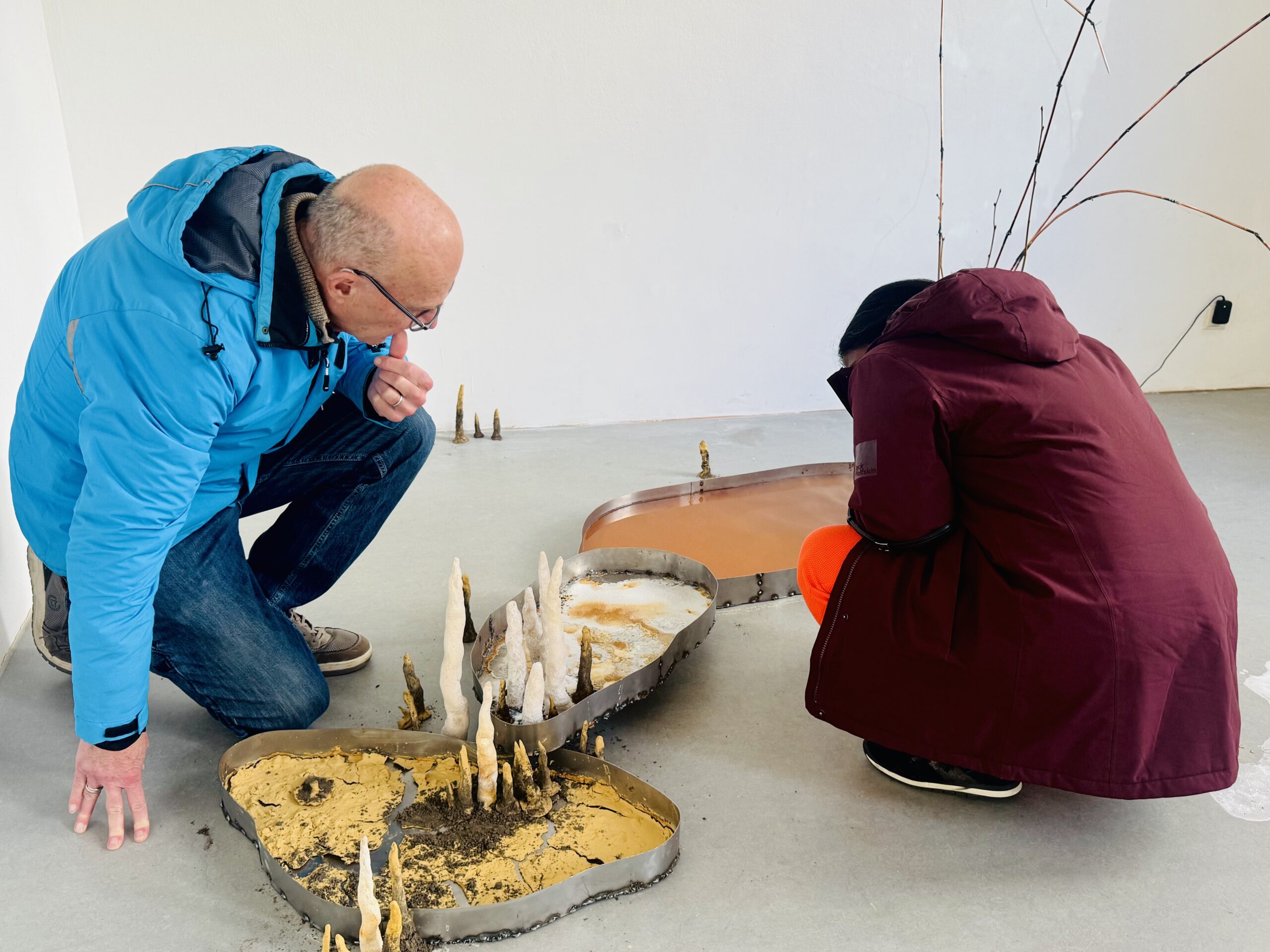
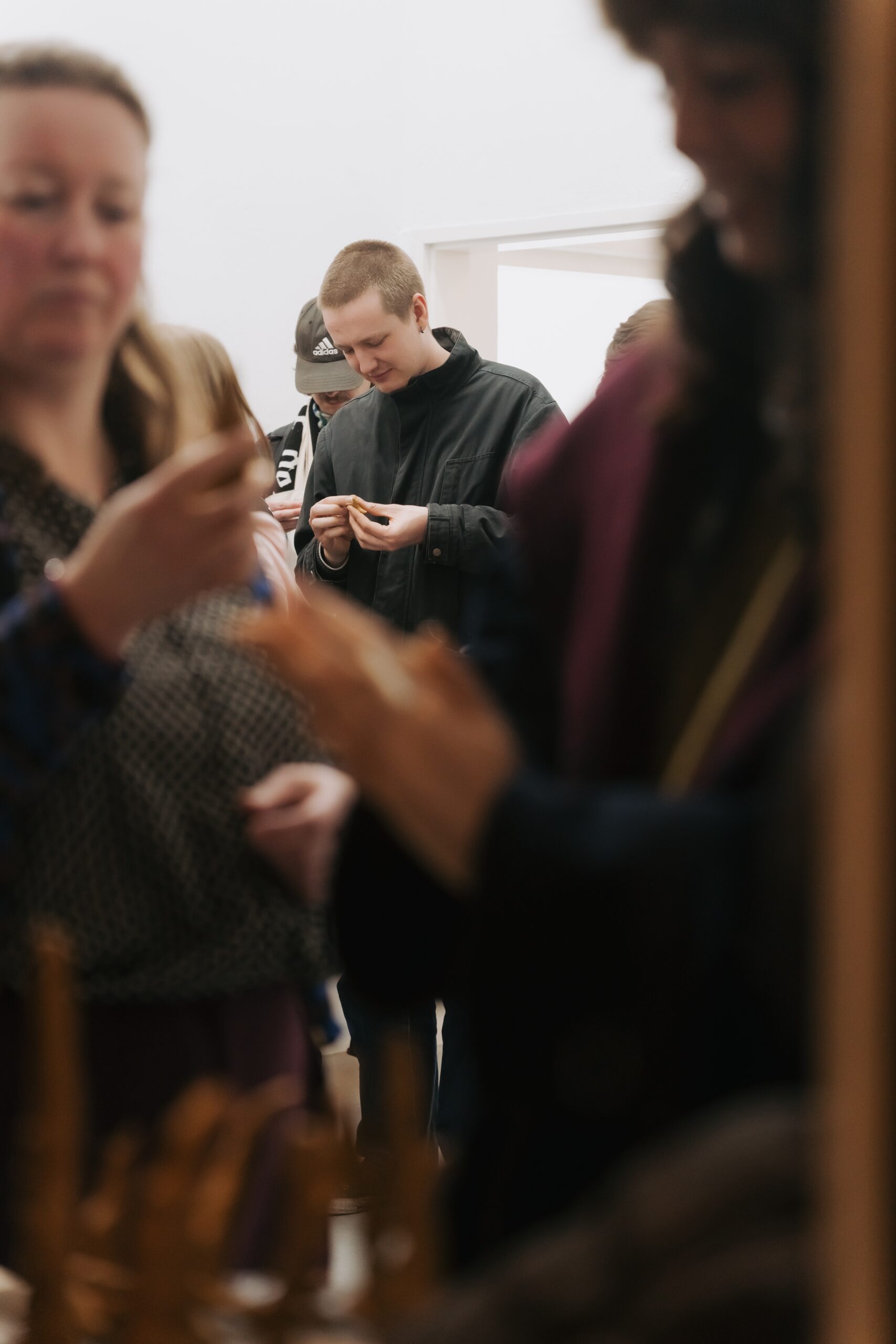
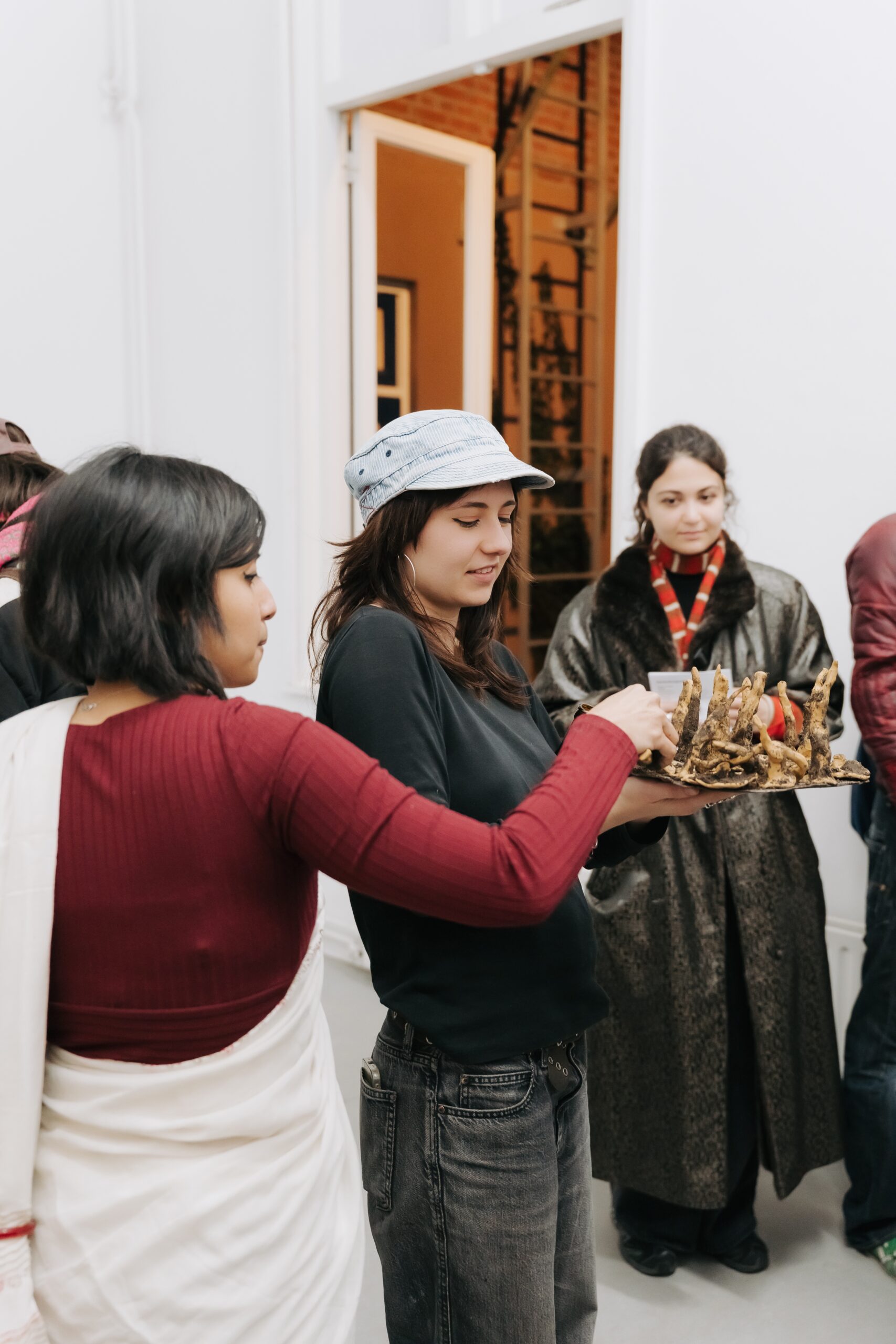
The space was activated through small gestures and collective root- making. Through interactive dialogue, the work returned to the question of what roots mean culturally and ecologically ?
Publication text: Why I make roots..(Page 18)
Growing up on a peninsula where residential roads often dissolved into water, it left its mark. The line between land and sea shifted constantly, and the refrain was always the same: this place would be swallowed soon. That steady rise and fall of water still shapes how I sense land under pressure.
Meeting the Dutch coastal regions, especially the salinity gradient in the Wadden Sea and around Texel, brought immediate echoes. The rising salt in the soil, the strange dryness in lowland areas, the small shifts in tidal behaviour all carried a familiar charge, recalling earlier changes witnessed in another place and time.
শ্বাসমূল /Aerial roots/ Breathing roots return again and again in this practice for that reason. The work listens to the slow negotiation between water, salt, soil, and more-than-human life. It is rooted in the shifting force of monsoon and drought, in aerial roots adapting to survive, and in the ongoing question of how we continue to live with eroding coastlines that are changing faster than we can fully process.